
Protect Your Concrete Before Voids Cause Costly Damage
Void filling services can help stop a concrete slab from sinking farther, but only when we identify why the empty space formed underneath it. A hidden void may start small, yet it can leave a driveway, sidewalk, patio, or interior slab without the support it needs. Over time, that lack of support can lead to cracks, uneven areas, and trip hazards.
Across Texas, we often see concrete problems connected to moving soil and water. Water can enter beneath slabs through poor drainage, plumbing leaks, erosion, or runoff that collects near the property. Once soil washes away or weakens, concrete may begin to settle into the open space below.
A slab does not always show obvious trouble right away. Catching changes early gives us a better chance to stabilize the area before the damage spreads or the concrete becomes harder to correct.
Why Concrete Sinks When Voids Form Below
Concrete is strong when weight is spread evenly across solid ground. When soil beneath part of a slab erodes, settles, or was not packed firmly enough from the start, the slab may lose that even support. The unsupported section can flex under vehicles, foot traffic, furniture, or everyday use, causing it to crack or drop.
Several conditions can create or worsen voids beneath concrete:
- Water flowing toward a slab because of poor grading or drainage
- Leaking plumbing or utility lines below or near the concrete
- Soil erosion beneath driveways, sidewalks, patios, and foundations
- Moisture changes that cause Texas soils to shift or weaken
- Gaps at slab edges that allow water to wash soil away
You may notice new cracks, a surface that slopes, water pooling near the concrete, or gaps along the edges. Doors near an interior slab may begin sticking if settlement affects nearby areas. Some sections can also sound hollow when tapped, which may point to a loss of support below.
These signs do not always mean the same repair is needed. We look at the slab, soil conditions, drainage patterns, and possible water sources to understand what is happening below the surface.
How Void Filling Services Restore Slab Support
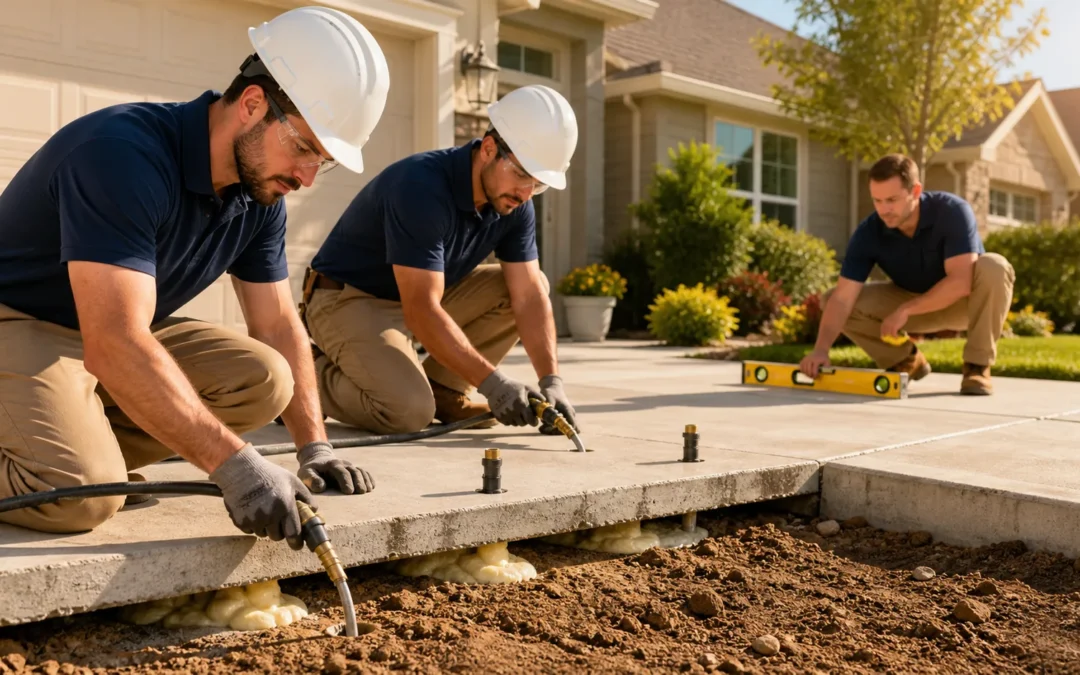
Void filling services restore contact between a concrete slab and the material beneath it. Rather than leaving the slab suspended over an empty pocket, we place an appropriate engineered fill into the void to support the concrete more evenly. This can help reduce movement and lower the chance of continued settlement.
Before work begins, our team evaluates the size, depth, and likely cause of the void. A small shallow gap below a sidewalk is different from a deeper void beneath a driveway or interior concrete slab. The right approach depends on the structure, access, surrounding soil, and whether the slab needs support only or also needs to be raised.
Repair materials may include polyurethane foam injection, cementitious grout, or another suitable fill material. Each option has a different purpose, so selecting one should follow a professional assessment rather than a one-size-fits-all approach.
Void filling is not simply pouring material into an empty space. The goal is to create reliable support beneath the slab and help spread loads across the area below. When the concrete has already settled, filling the void may be only one part of the solution.
What Prevents Concrete From Sinking Again
Lasting results depend on correcting the condition that caused soil loss in the first place. Filling a void can stabilize the slab, but water that continues to flow below the concrete may create another problem later. That is why we consider drainage and moisture control alongside the void filling work.
Helpful preventive steps may include:
- Improving drainage around the slab and foundation
- Extending downspouts away from concrete surfaces
- Repairing plumbing leaks that may affect nearby soil
- Redirecting surface water so it does not collect near slabs
- Sealing vulnerable joints and correcting grading where needed
Void filling and concrete leveling are closely related, but they are not the same service. Void filling restores support beneath the slab. Concrete leveling may be needed when a slab has already dropped and needs elevation correction. In some cases, both services make sense because a settled slab may need support restored before or during the leveling process.
Retaining wall concerns can also affect drainage and soil movement around a property. When soil is not held properly or water is not directed properly, water can travel where it should not and weaken support near hardscapes. Looking at the full property condition helps us avoid treating only the visible crack or low spot.
Know When Your Property Needs a Professional Inspection
An inspection is a smart step when cracks keep returning, concrete feels uneven, water collects near slabs, or gaps along concrete edges are getting larger. Signs of erosion around a foundation, driveway, patio, or sidewalk also deserve attention. A professional evaluation can help determine whether the concern involves a void, settlement, drainage, or another condition below the slab.
Waiting can allow a small unsupported area to grow into a larger concrete problem. If you suspect a void, focus on the changes you can see, such as new slopes, expanding cracks, standing water, and separating concrete edges. Addressing the source of water and restoring slab support early can help protect the concrete from further sinking and reduce the risk of more extensive repairs.
Restore Stable Support Beneath Your Concrete
Lift-Texas Construction provides void filling services designed to stabilize unsupported slabs and help preserve the surface above. Our team evaluates the affected area to determine the right approach for your concrete. Ready to discuss your concerns? Contact us to schedule an evaluation.