
See How Faster Slab Repair Can Protect Your Property
Sunken concrete can turn a useful surface into a costly headache. Uneven driveways, sidewalks, patios, garage floors, and warehouse slabs can create trip hazards, send water toward the wrong areas, and make a property look neglected.
When concrete settles, you usually face two choices: raise the existing slab or remove it and start over. We help Texas property owners compare polyurethane foam lifting with replacement by looking at the slab’s condition, the reason it moved, the amount of damage, and what the property needs for the long run.
A professional assessment matters because settlement does not happen for just one reason. We often look for soil movement, erosion, plumbing leaks, poor drainage, and voids beneath the slab before recommending a repair plan.
How Polyurethane Foam Lifting Restores Settled Concrete
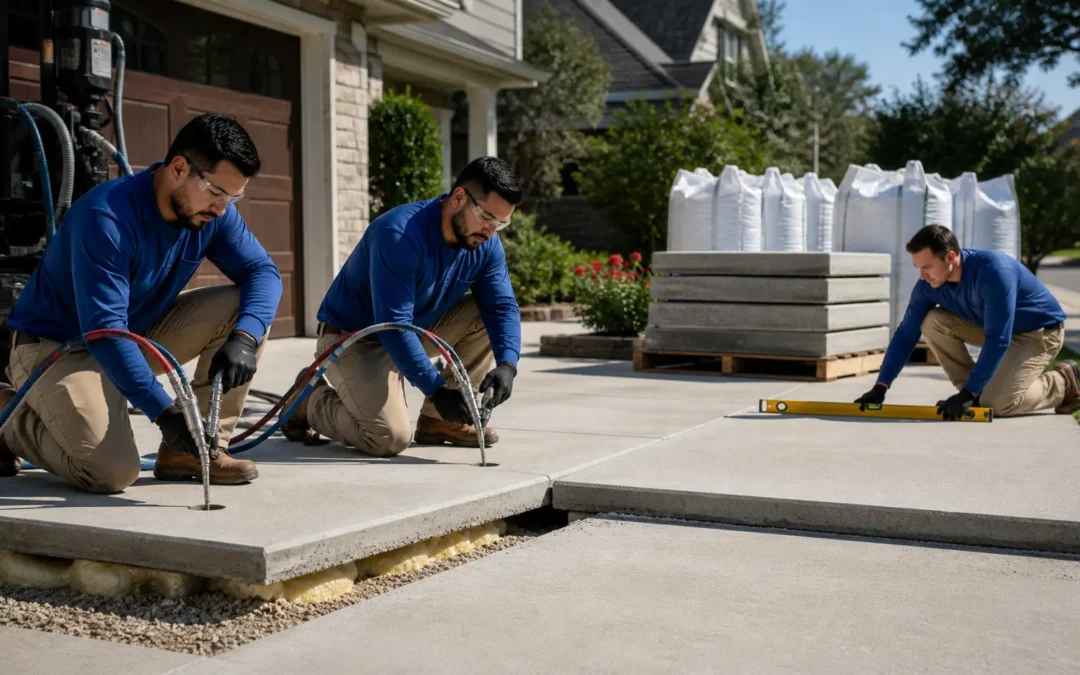
Polyurethane foam lifting raises settled concrete without tearing out the entire slab. Our technicians drill small access holes through the concrete and inject expanding, high-density foam beneath it. As the foam fills empty spaces below the slab, we carefully lift the concrete toward its intended position.
This process can do two jobs at once: fill voids and restore a smoother, safer surface. Since the slab stays in place, there is far less demolition than a full replacement project. The drill holes are small, and many repaired surfaces can return to use shortly after the work is complete.
Polyurethane foam lifting may be a good fit for largely intact concrete surfaces, including:
- Sidewalks and residential walkways
- Driveways and garage floors
- Patios and pool decks
- Interior concrete slabs
- Warehouse floors and commercial walkways
The best candidates are slabs that remain solid enough to lift and have a settlement issue that can be addressed. A slab may look worn because it dropped out of place, not because the concrete itself has failed. In that situation, lifting can preserve the existing concrete while correcting the uneven area below it.
When Concrete Replacement Is the Better Long-Term Choice
Not every slab can be lifted safely or successfully. Replacement may make more sense when concrete has widespread cracking, crumbling edges, major spalling, severe heaving, or damage that has weakened the slab itself. Raising broken material does not turn it back into sound concrete.
A slab can also reach a point where its pieces are too unstable to restore as one surface. If it has broken into multiple sections, shifted far out of place, or deteriorated across a large area, removing it may provide a cleaner path forward. Replacement also gives us a chance to address major grading, drainage, or preparation concerns before new concrete is installed.
Full replacement brings more activity to the site. It can involve demolition, hauling old material away, preparing the base, setting forms, pouring new concrete, finishing the surface, and allowing time for curing. That can affect driveway access, entrances, parking areas, landscaping, gates, and normal business operations.
Still, disruption alone should not decide the repair. When a slab has reached the end of its serviceable condition, replacement may be the more practical choice because it removes badly damaged concrete instead of trying to repair material that cannot hold up well.
Compare Downtime and Site Disruption
The repair method changes how much of your property is affected during the work. Polyurethane foam lifting often avoids the large-scale removal and replacement steps that come with a new pour. That can make it easier to protect nearby improvements and limit disturbance around the repair area.
Final project needs depend on several details, including slab size, the depth of settlement, access to the area, and the condition of the voids underneath. A small settled sidewalk panel and a large commercial floor with widespread settlement are not the same kind of project, even if both involve uneven concrete.
Here is how the two approaches generally compare:
- Foam lifting keeps the existing slab in place when it is still sound.
- Replacement removes damaged concrete and creates a new surface.
- Foam lifting can often be completed with less interruption to daily access.
- Replacement requires more preparation and time before the area returns to normal use.
- Both methods require finding out why the slab moved in the first place.
For a home, the difference may involve whether vehicles can use the driveway or whether a patio remains accessible. For a commercial property, it may affect customers, deliveries, employees, equipment, and foot traffic. We consider the surrounding space, not just the slab, when reviewing which method makes sense.
Match the Repair to Soil, Damage, and Structural Needs
Texas soil conditions can put steady pressure on concrete. Expansive clay soils, changing moisture levels, erosion, and underground water movement may create empty spaces or uneven support below a slab. Concrete is strong, but it depends on the ground beneath it to stay stable.
Polyurethane foam lifting corrects slab elevation and fills voids, but it may not solve every reason the slab moved. If water is washing soil away, drainage is sending water toward the slab, or a plumbing leak is affecting the ground, those conditions may need attention as part of a longer-term plan.
Some signs point beyond a cosmetic concrete problem. We recommend professional guidance if you notice concerns such as:
- Interior wall cracks
- Doors that stick or no longer close properly
- Sloping floors
- Widening cracks on exterior walls
- Movement near the home or building foundation
A settled sidewalk or driveway can be separate from a foundation issue, but the two should not be confused. Looking at the full property helps us determine whether the concern is limited to a slab or may involve deeper structural movement.
Get the Right Repair Plan Before Damage Spreads
Polyurethane foam lifting can be an efficient option for stable, largely intact concrete that has settled because of voids or uneven soil support. Replacement is often the better answer for slabs with severe deterioration, extensive breakage, or site conditions that lifting cannot correct.
Before choosing either path, focus on the cause of movement as much as the visible damage. A repair plan that accounts for slab condition, water movement, soil support, and nearby structural concerns gives you a clearer way to protect the property from continued trouble.
Restore Stable, Level Concrete With Confidence
Lift-Texas Construction can assess your concrete concerns and explain whether polyurethane foam lifting fits the condition of your slab. Our team will help you understand the practical next steps based on the damage and underlying support. When you are ready to discuss your property, contact us to schedule an evaluation.