
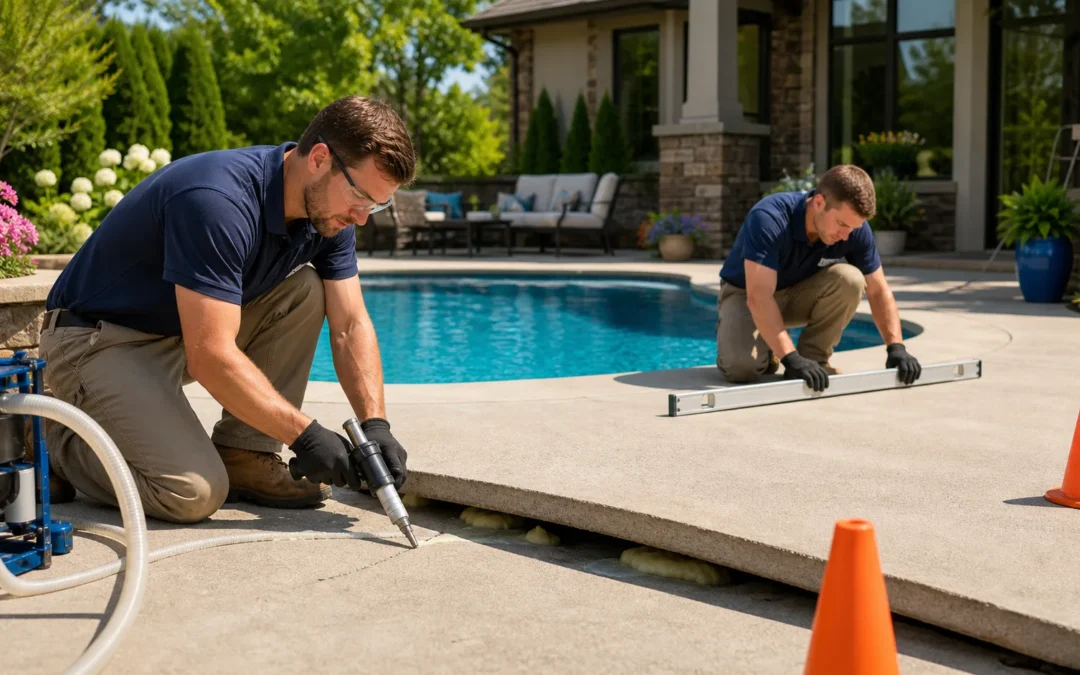
Restore a Safer Pool Deck Without Full Replacement
An uneven pool deck can turn a relaxing outdoor area into a real trip hazard. When one concrete slab sinks or rises above the next, even a small change in height can catch a bare foot, sandal, or poolside chair leg. Around a pool, where people may be wet and distracted, smoother walking surfaces matter.
We often see warning signs before the problem becomes more serious. Raised slab edges, widening joints, cracks, puddles, and noticeable slopes near steps or pool entries can all point to concrete movement. Water that flows toward the pool shell or the home is another concern. Rather than removing concrete that is otherwise in good shape, concrete lifting may restore the affected slab closer to its proper height.
Before recommending a repair, we look beyond the visible trip point. The cause of movement matters because a lifted slab needs stable support beneath it. Our evaluation considers the concrete, soil conditions, voids, and drainage patterns that may be affecting the deck.
Why Pool Deck Slabs Become Trip Hazards
Concrete pool decks rest on soil, and that soil can change over time. Across Texas, expansive soils may swell when wet and shrink when dry. If the ground beneath one section shifts while nearby concrete stays in place, the result can be an uneven edge between slabs.
Settlement can also happen when soil was not compacted well before the deck was installed. Erosion, plumbing leaks, poor drainage, and water moving beneath the slab may wash away supporting soil. As empty spaces form, the concrete may no longer have firm support. It can sink, tilt, crack, or separate from an adjoining section.
Common causes we look for include:
- Soil movement beneath the deck
- Voids caused by erosion or water flow
- Drainage that collects along slab joints
- Possible plumbing leaks near the pool area
- Poor surface grading that directs water toward the deck
Water is often part of the problem, not just a result of it. It can collect in low spots, run through open joints, and carry soil away from beneath the concrete. Over time, that movement may make the height difference between slabs more noticeable. Addressing the reason for the settlement helps us plan a repair that is better suited to the conditions around your pool.
How Concrete Lifting Restores Safer Walking Surfaces
Concrete lifting is a repair process used to raise settled concrete slabs and reduce uneven transitions between deck sections. Instead of removing the entire slab, we work to bring the affected area closer to its intended elevation. The goal is a smoother, safer path around the pool while preserving concrete that remains in usable condition.
Every deck is different, so we begin by reviewing how and where the slab has moved. We check for signs of weak support, soil loss, water intrusion, and nearby drainage concerns. Once we understand the condition beneath the concrete, we determine the appropriate way to lift and support the slab.
The general process may include:
- Checking slab elevations, cracks, joints, and slopes
- Identifying voids or areas with weak soil support
- Raising the settled concrete with an appropriate repair material
- Reviewing final alignment at walkways, steps, and pool entries
- Checking that water can drain away from vulnerable areas
For many pool decks, concrete lifting means less demolition debris and less disruption than full slab replacement. It can also preserve surrounding landscaping, pool features, and usable concrete. Still, results depend on the condition of the slab and what caused it to move in the first place. A cracked slab with ongoing soil loss needs a different conversation than a sound slab that has simply settled.
When Concrete Lifting Fits Pool Deck Repairs
Concrete lifting is often a good fit when the slab itself is structurally sound but has settled, tilted, or formed a hazardous height difference with nearby concrete. If the deck has a low section that holds water or an edge that sits below the next slab, lifting may help restore a more even walking surface.
That said, lifting is not the answer for every pool deck problem. Some conditions may call for added repairs or a different approach. We may find that void filling, drainage correction, crack repair, or slab replacement should be considered along with or instead of lifting.
A closer look is especially important when you notice:
- Concrete that is badly broken or deteriorated
- Active plumbing leaks or signs of moisture below the deck
- Large areas of missing soil beneath the slab
- Continued movement after earlier repairs
- Damage or movement that may involve the pool structure
Pool decks are not separate from their surroundings. Water from downspouts, irrigation, surface runoff, or leaking lines can affect the soil under and around the concrete. By identifying those conditions early, we can help you understand whether concrete lifting addresses the full problem or only one part of it.
What a Professional Pool Deck Evaluation Should Include
A trip point may be the first thing you notice, but it should not be the only area reviewed. We inspect the larger deck area to see how the slabs relate to each other, where water travels, and whether cracks or gaps suggest ongoing movement. A single low corner can sometimes point to a broader drainage or soil-support issue.
During an evaluation, we consider slab elevations, visible cracks, joint separation, standing water, settlement patterns, and nearby drainage paths. We also look at conditions that may be feeding moisture into the area, such as downspouts, grading, irrigation, and runoff from nearby surfaces.
Keeping an eye on changes around your pool can make a difference. New cracks, recurring puddles, widening gaps, or a slab that continues to settle are all useful details to note. Early professional evaluation can help identify repairs that may limit how far the movement spreads and help protect the walking surface before it becomes a larger safety concern.
Protecting Pool Deck Safety
Uneven concrete around a pool should not be ignored, especially when it creates a clear trip hazard or sends water toward the pool shell, home, or other vulnerable areas. Concrete lifting can be a practical repair for settled slabs that are still in sound condition, but the supporting soil and drainage conditions need attention too.
A safer pool deck starts with understanding why the concrete moved. When slab elevation, voids, water flow, and nearby drainage are reviewed together, you can make a more informed decision about restoring a smoother outdoor surface without unnecessary replacement.
Restore a Safer, More Even Pool Deck
Lift-Texas Construction can help you determine whether concrete lifting is the right approach for your uneven pool deck. Our team evaluates the slab and the conditions beneath it to recommend a practical path forward. Contact us to discuss your pool deck concerns and schedule an assessment.