
Protect Your Property by Looking Beyond Cracks
Cracks are often the first sign that makes you worry about your foundation, but they are rarely the whole story. Wall cracks, sticking doors, uneven floors, and gaps around windows can all point to movement, yet the cause may be below the surface or outside the building itself. That is why we approach a foundation inspection in Texas as more than a search for visible damage.
During an inspection, we look at how your symptoms connect to soil movement, drainage, slab support, and structural stress. A complete assessment may uncover voids, water-management concerns, settling concrete, or retaining wall problems that need attention alongside any foundation repairs.
Cracks Can Signal Movement Below the Surface
Not every crack means there is a major foundation issue. Concrete, drywall, brick, and other materials can develop small surface cracks over time. Still, certain crack patterns may show that movement is continuing or affecting more than one part of the structure.
Signs we pay close attention to include:
- Diagonal cracks near doors and windows
- Stair-step cracks in brick or masonry
- Gaps that widen around trim, windows, or exterior walls
- Cracks that return after they have been patched
- Several symptoms appearing in different areas of the property
A crack tells us where stress is showing up, not always where the problem began. For example, a wall crack may relate to soil shifting beneath part of a slab, water collecting near the foundation, or uneven support below a concrete area. That is why we look at each crack in context.
Our evaluation considers the crack’s location, direction, width, and whether it appears to be changing. We also compare it with related signs, such as sloping floors, stuck doors, or separation around windows. This helps us determine whether the foundation appears stable, settling, lifting, or reacting to another condition.
Cosmetic patching can hide a crack for a while, but it does not correct active movement. Identifying the source first helps you make decisions based on what your property actually needs.
Texas Soils and Water Can Drive Structural Changes
Across many parts of Texas, clay soils can change as moisture levels rise and fall. When soil becomes saturated, it may expand. When it dries, it may shrink. Those changes can place uneven pressure on slabs, piers, walkways, and other concrete features around a building.
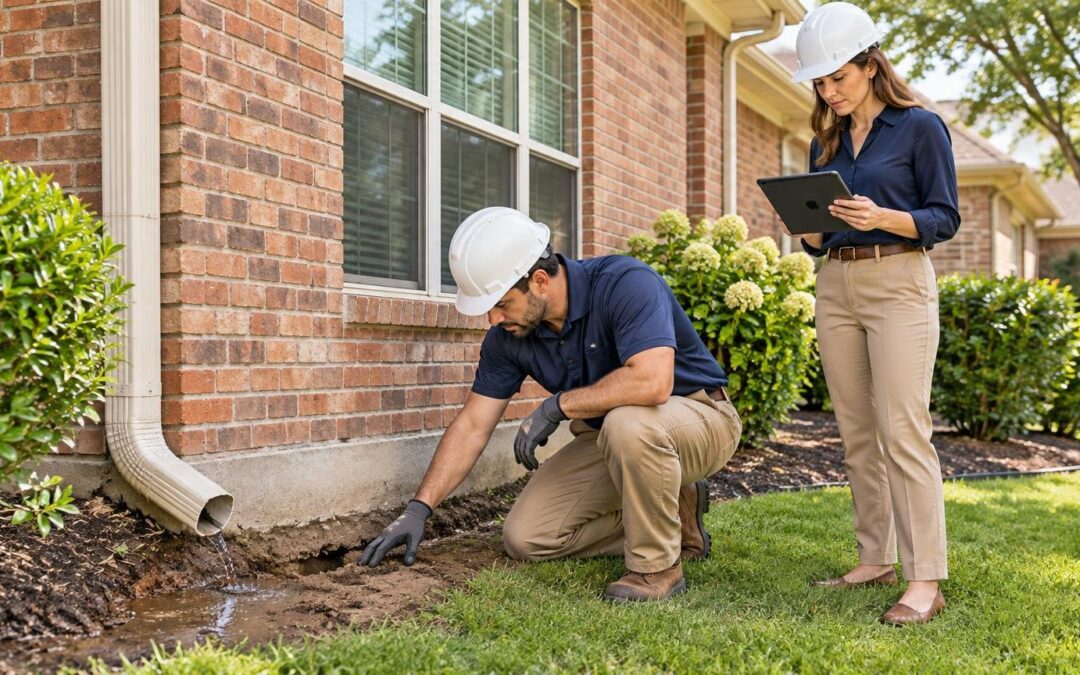
Water is often a major part of the picture. During a foundation inspection in Texas, we look for signs that water may be flowing toward the structure or collecting in the wrong places. Small site conditions can have a larger effect over time, especially when they keep soil near one side of the building wetter than the rest.
Conditions we may assess include:
- Grading that directs runoff toward the foundation
- Downspouts that discharge too close to the building
- Pooling water near concrete or exterior walls
- Signs of possible plumbing leaks
- Runoff paths that wash soil away from supported areas
The right recommendation depends on what we find. Some properties may need foundation repair, while others may benefit from drainage correction, soil support measures, or continued monitoring. The goal is not to jump to one solution. It is to understand how soil and water are affecting the structure before the movement grows.
Hidden Voids Can Undermine Slabs and Walkways
A void is an empty space beneath concrete. These spaces can form below slabs, driveways, sidewalks, patios, and interior floors when soil erodes, fill shifts, or water moves material away from underneath the concrete. Poorly compacted fill and leaking water lines can also leave portions of a slab without the support they need.
You may notice a void through changes above it. Concrete can sink, separate from nearby sections, or feel uneven underfoot. Water may pool in a low area, and some slabs can produce a hollow sound when weight moves across them. Those signs do not always confirm a void, but they give us a reason to inspect the area more closely.
Before recommending concrete lifting or leveling, we want to understand why support was lost. Lifting a settled section may improve safety and restore a more even surface, but the result can be short-lived if water is still washing away soil below it. Void filling can restore support beneath concrete, while drainage improvements or leak-related repairs may help reduce the chance of repeated settlement.
Looking below the slab helps us avoid treating a low spot as an isolated concrete problem when the real concern is the ground beneath it.
Drainage and Retaining Walls Can Reveal the Cause
Drainage features and retaining walls can offer important clues during a structural evaluation. Water collecting near the foundation, soil washing away from a slope, or pressure building behind a wall can change the support around concrete and foundation components.
Retaining walls are built to hold back soil, but they also depend on proper drainage and stable conditions behind them. When water becomes trapped, the pressure against the wall can increase. Over time, that pressure may contribute to visible changes that should not be ignored.
Warning signs we look for include leaning, bowing, cracking, separated blocks, displaced soil, and blocked drainage features. A wall that is no longer managing soil pressure effectively may affect nearby grading, walkways, driveways, or building areas.
Rather than viewing the foundation as separate from the rest of the property, we connect the site conditions together. Grading, downspouts, swales, French drains, erosion control, and retaining walls may all influence how water moves and where soil remains stable. A fuller view helps us identify conditions that may be contributing to the visible damage you see.
Take the Right Next Step for Your Structure
A foundation inspection is most useful when it explains both the visible symptoms and the conditions behind them. Recurring cracks, uneven concrete, drainage problems, and signs of settlement deserve a closer look because they may be connected to soil movement, unsupported slabs, water flow, or retaining wall pressure.
Based on the findings, the appropriate work may involve foundation repair, concrete leveling, void filling, drainage correction, retaining wall work, or monitoring. The most practical path is the one that addresses the underlying issue instead of simply covering up the damage that brought it to your attention.
Get Clear Answers About Your Foundation
Lift-Texas Construction can help you understand what your property needs and why. Arrange a foundation inspection in Texas to evaluate the conditions affecting your foundation and discuss practical next steps. When you are ready to talk with our team, contact us to request an evaluation.